When homeowners start dealing with drainage problems, the first assumption is often that the gutters are clogged. While that can certainly be true, it’s rarely the full story. In many cases, drainage issues are less about debris—and more about design, capacity, and how water moves across the entire structure of the home. As a professional landscaping company, we have found that the most effective way to solve drainage problems is to start with a simple but critical question: Where is the water coming from, and where is it trying to go?
Water Collection & Distribution
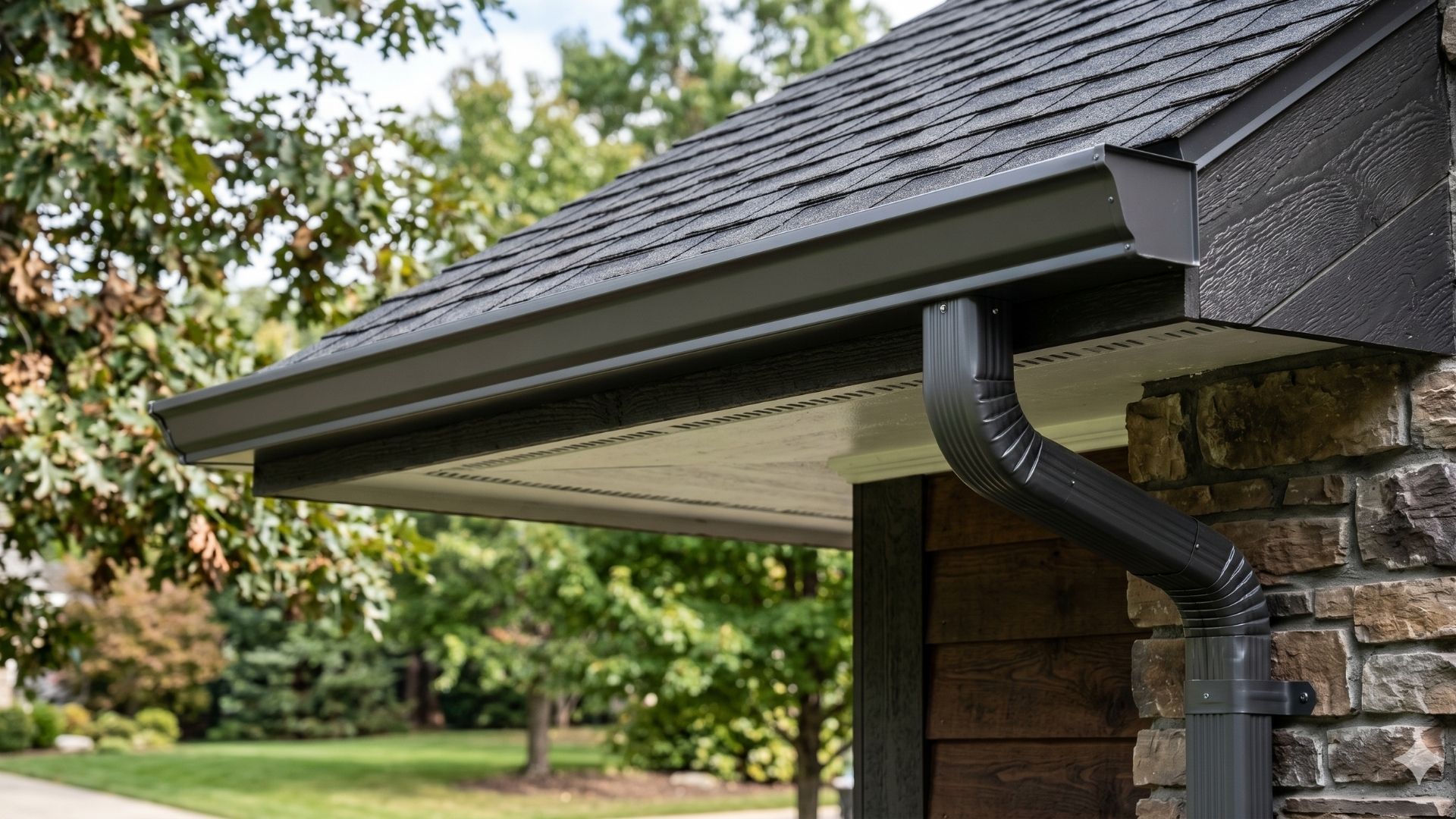
Gutters don’t create drainage—they collect it. The real system begins at the roofline, where rainfall is captured and directed toward specific drainage points. If that system is undersized, poorly pitched, or not designed for local rainfall intensity, problems will show up downstream no matter how clean the gutters are.
This is especially important in regions that experience heavy seasonal storms. Effective landscape design and landscaping services must account for these short bursts of intense rainfall that can overwhelm systems that would otherwise seem adequate in lighter conditions.
When “Clogs” Aren’t the Real Problem
It is easy to assume that overflowing gutters mean a blockage. But in many cases, the issue is capacity. Even a perfectly clean system can fail if the gutter size is too small for the roof area or if downspouts are too narrow.
In these cases, cleaning the gutters won’t solve the issue—because the problem isn’t debris, it’s design. This is where designed drainage and proper grading plans are important in strategic water maintenance.
The Reality of Gutter Guards
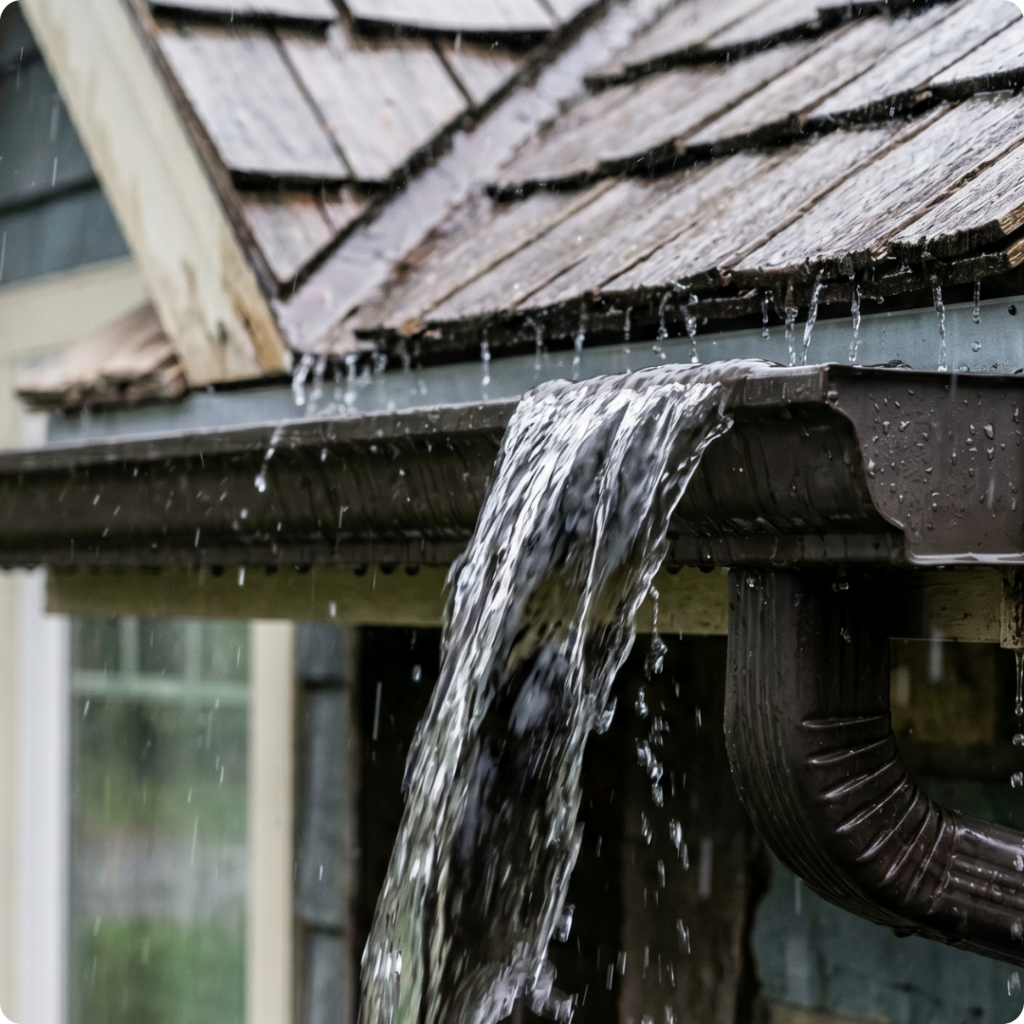
Gutter guards are often marketed as a long-term fix, but they are not a universal solution. During heavy rain, water can sheet off the roof faster than it can enter the guard systems. Over time, fine debris can still accumulate, making maintenance more difficult. They are a tool—not a fix-all—and should be evaluated by a qualified landscaping company.
Drainage Problems Don’t Stay on the Roof
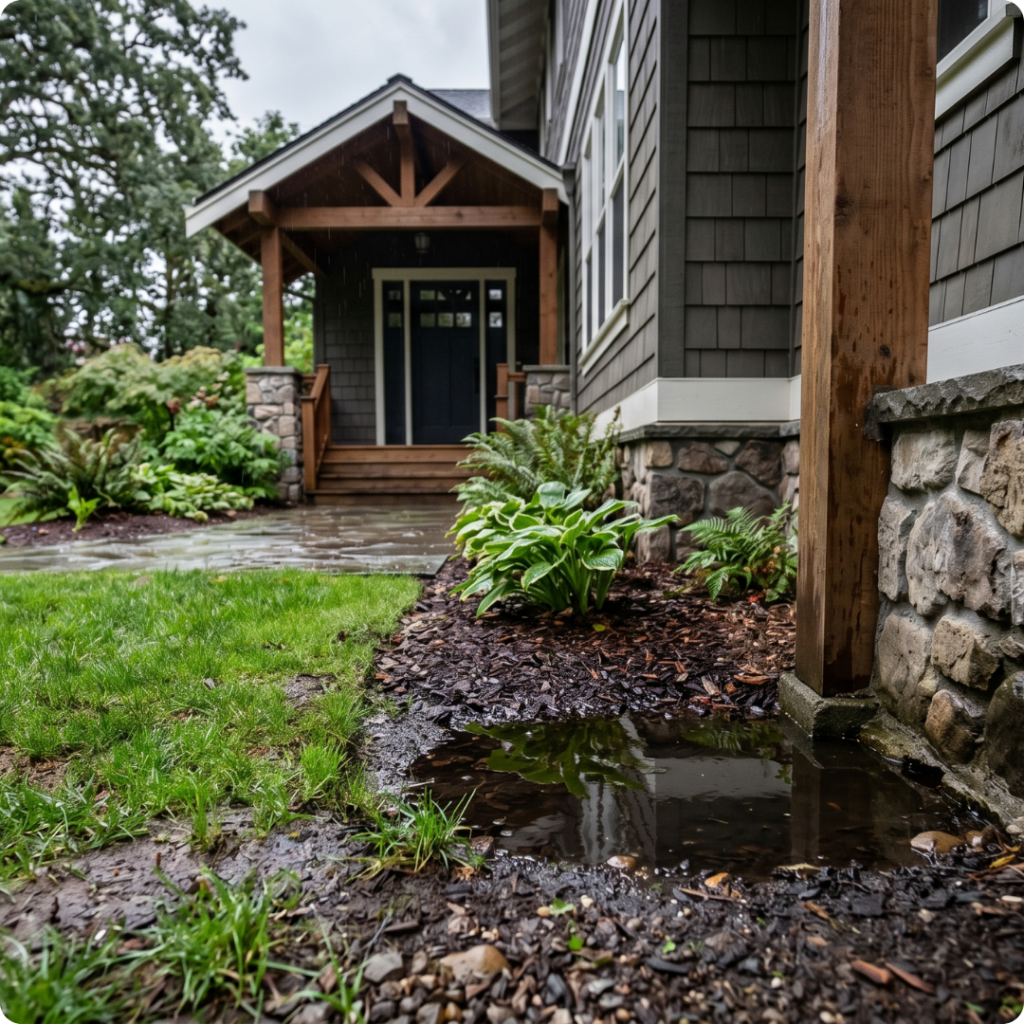
One of the most overlooked aspects of poor gutter performance is what happens after water leaves the roof system. When water is not properly directed away from the home, it can create erosion around foundations or saturated landscaping. The landscape design and services you choose should look at these ground-level symptoms to diagnose the root cause.
The Milieu Approach to Yard Care
At Milieu Landscaping, we approach drainage as a system-wide design challenge. As a premier landscaping company, our goal isn’t just to manage water—it is to control where it goes, how quickly it moves, and what it impacts along the way through expert yard care.
Common Drainage Questions & Expert Insights
Why do my gutters overflow even when they are clean?
This is usually a capacity issue rather than a maintenance one. If your roof has a large surface area or steep pitches, standard gutters may be unable to handle the volume of water during heavy downpours. As a landscaping company, we often find that increasing downspout size or adjusting the pitch can solve this without needing new gutters.
How can landscaping services help with basement moisture?
Many basement leaks start with poor yard care at the surface. If the ground doesn’t slope away from your foundation, or if downspouts discharge water too close to the house, gravity pulls that water into your crawlspace or basement. We design “exit strategies” for water using French drains or regrading.
Are gutter guards worth the investment for my yard?
Gutter guards are helpful for homes under heavy tree canopy to prevent large clogs, but they aren’t “set it and forget it.” They still require professional landscape services to check for silt buildup that can eventually block water flow entirely.
Stop guessing and start protecting your home. Contact Milieu Landscaping today for a professional drainage assessment.